It is easy to feel overwhelmed or uncertain of how to proceed when preparing a scientific manuscript, grant application, or conference abstract. I have gathered some advice from journal editors that may guide your writing process. Although these tips are for journal articles, many of them apply to other types of academic writing.
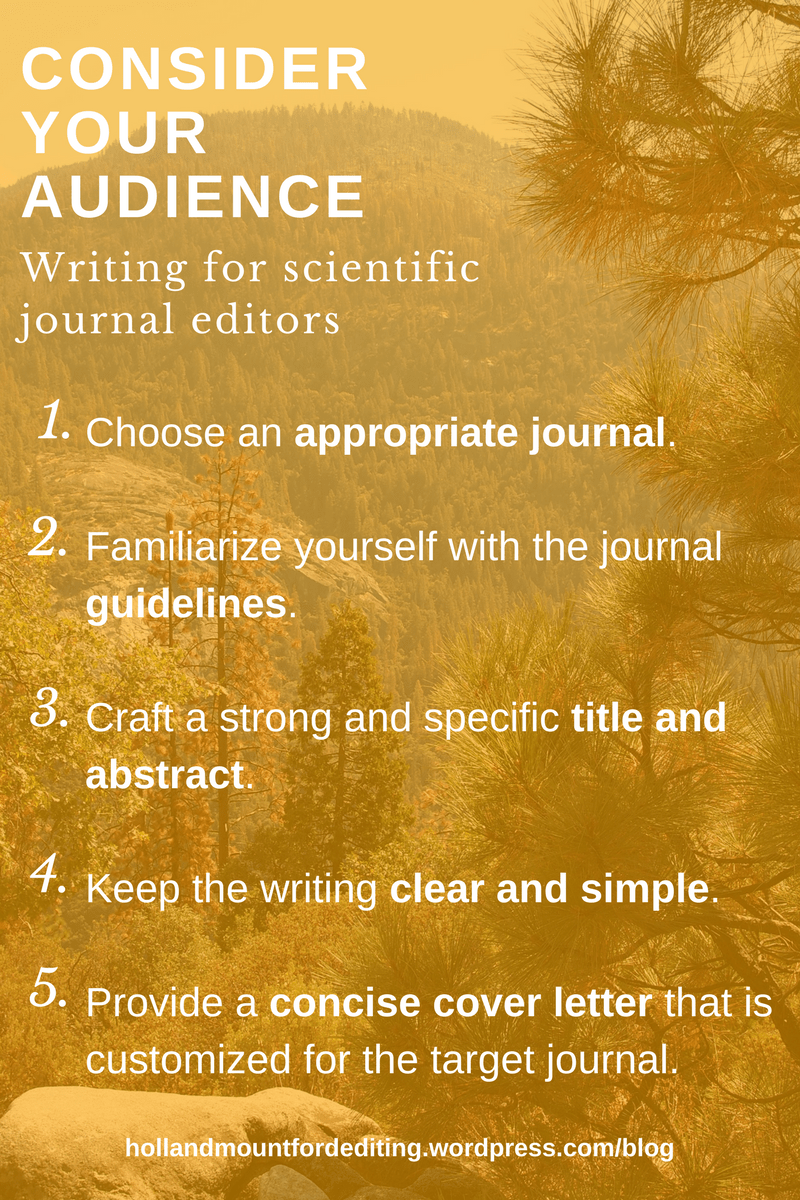
1. Choose an appropriate journal. You should research the journals that publish research in your field. Find one with a scope that includes your study.
2. Familiarize yourself with the journal guidelines. Maximize your chances for success by following the writing and formatting guidelines of your target journal. Avoid a desk rejection that is related to the quality of the manuscript preparation.
3. Craft a strong and specific title and abstract. The journal guidelines often provide details about how to prepare these components of the article. Your abstract and title are critical as they will be indexed and serve as the first introduction to your work.
4. Keep the writing clear and simple. A well-crafted manuscript will put the emphasis on your research and ideas. Work through multiple drafts, have a colleague look over your work, and consider hiring a professional editor to improve your writing.
5. Provide a concise cover letter that is customized for the target journal. The experts agree: the cover letter is important. It allows you to introduce your work and argue that it is a novel study of interest to the readership of your target journal.
Check out these resources, which formed the basis of the infographic and post:
http://www.sciencemag.org/careers/2007/04/tips-publishing-scientific-journals
https://www.elsevier.com/connect/7-steps-to-publishing-in-a-scientific-journal
https://www.elsevier.com/connect/infographic-tips-to-writing-better-science-papers
How do you optimize your science writing for assessment by journal editors? Ask questions or share your experience below!
 Holland-Mountford Editing | Scientific editing
One thought on “Consider your audience: Writing for scientific journal editors”